AI systems
Inside an AI social media team: 62 agents, 8 departments, one owner
Short answer
An AI social media team is a set of AI agents where each one has a single job: spotting trends, writing, publishing, watching competitors, running ads, calling leads back, answering reviews. They all read the same plain files about your brand, and one orchestrator checks every piece of work before it goes out. The version in my reel has 62 agents in 8 departments, and the owner still decides the voice, the budget and anything that reads like a promise.
The whole map
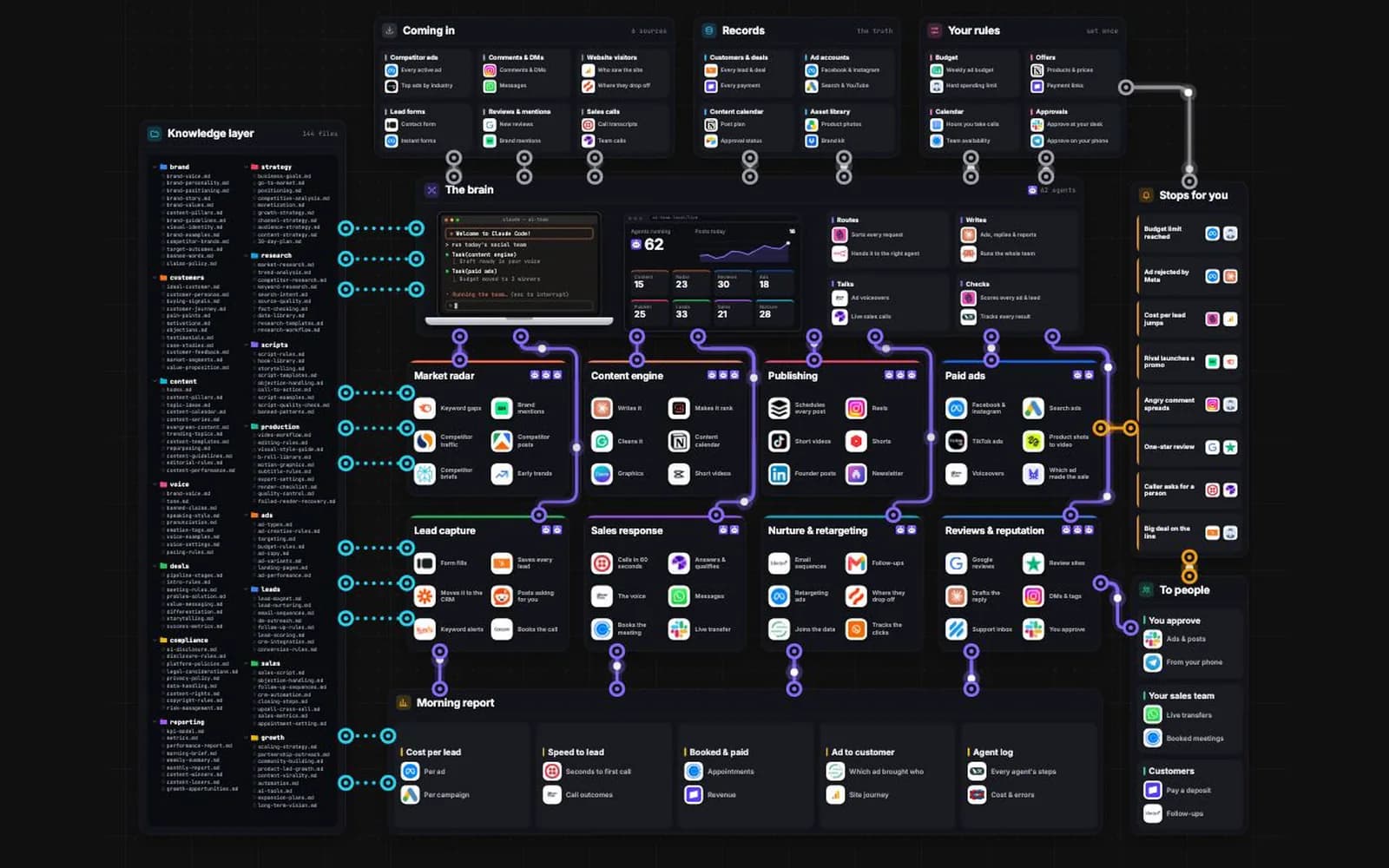
The whole system on one page. Every card is an agent with one job.
The map has four parts. On the left, the knowledge layer: plain files with your brand, your voice, your offers and your rules. On top, everything coming in: ads, comments, reviews, form fills and calls. In the middle, the brain, the orchestrator. Underneath, eight departments, each a small group of agents with real tools.
Nothing in a department works from memory. Every agent reads the knowledge layer first, so a reply to a midnight DM and next week’s ad both sound like the same business.
The knowledge layer: plain files every agent reads
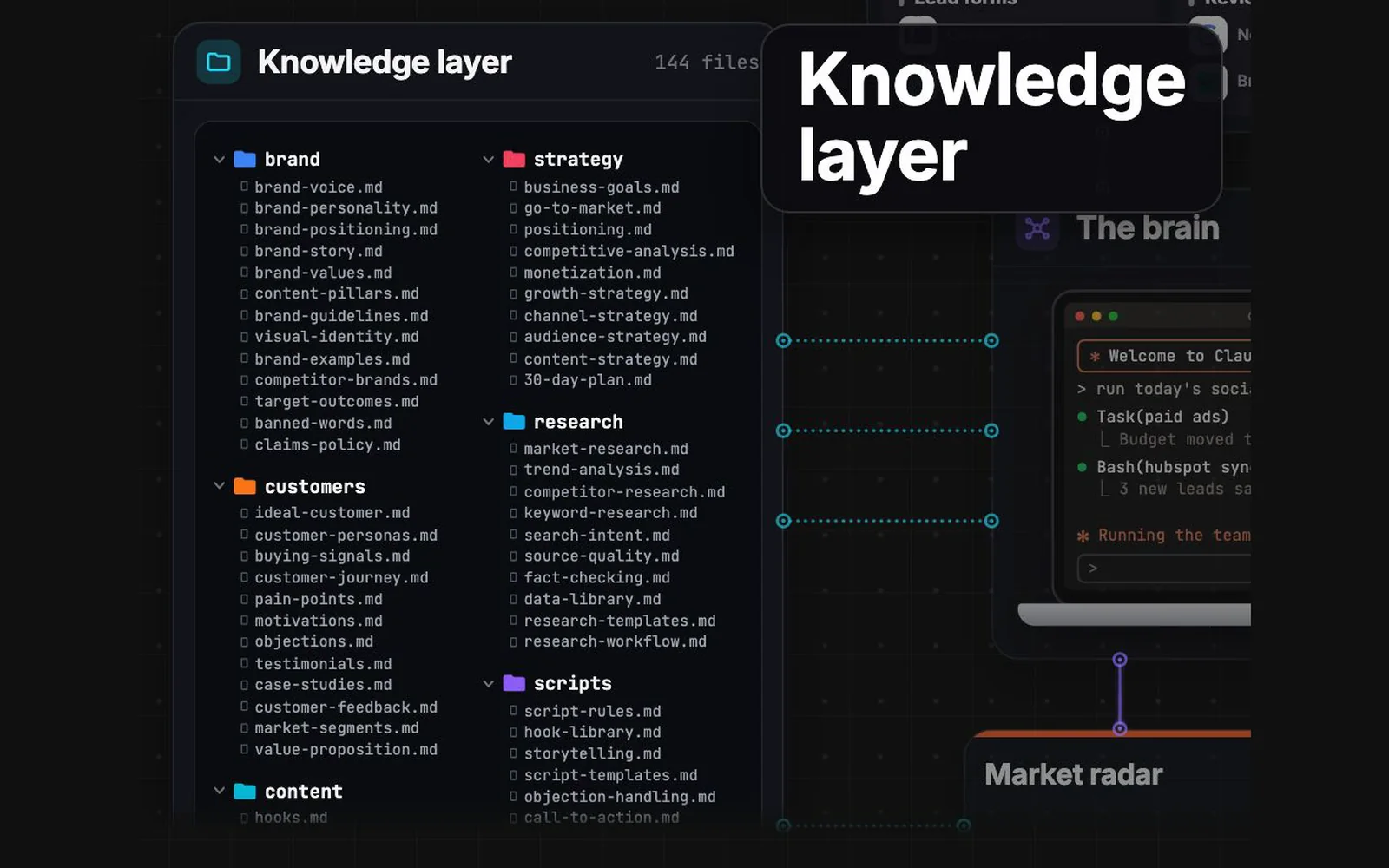
144 plain .md files, grouped by topic. You can open and edit every one of them.
This is the part most people skip, and it’s the part that makes the rest work. It isn’t a database or a dashboard. It’s a folder of plain text files, one topic per file, that you can read and correct yourself.
- brand-voice.md: how you sound. Mine starts with four lines: warm, direct, short lines, no hype words.
- voice-settings.md: your pace and your tone for spoken content, used by the voice agent and voiceovers.
- value-messaging.md: your offers in your words, so no agent invents a discount or a promise.
- Folders for customers, strategy, ads, leads, sales and compliance, each read only by the departments that need it.
Trend watch: it moves before you notice
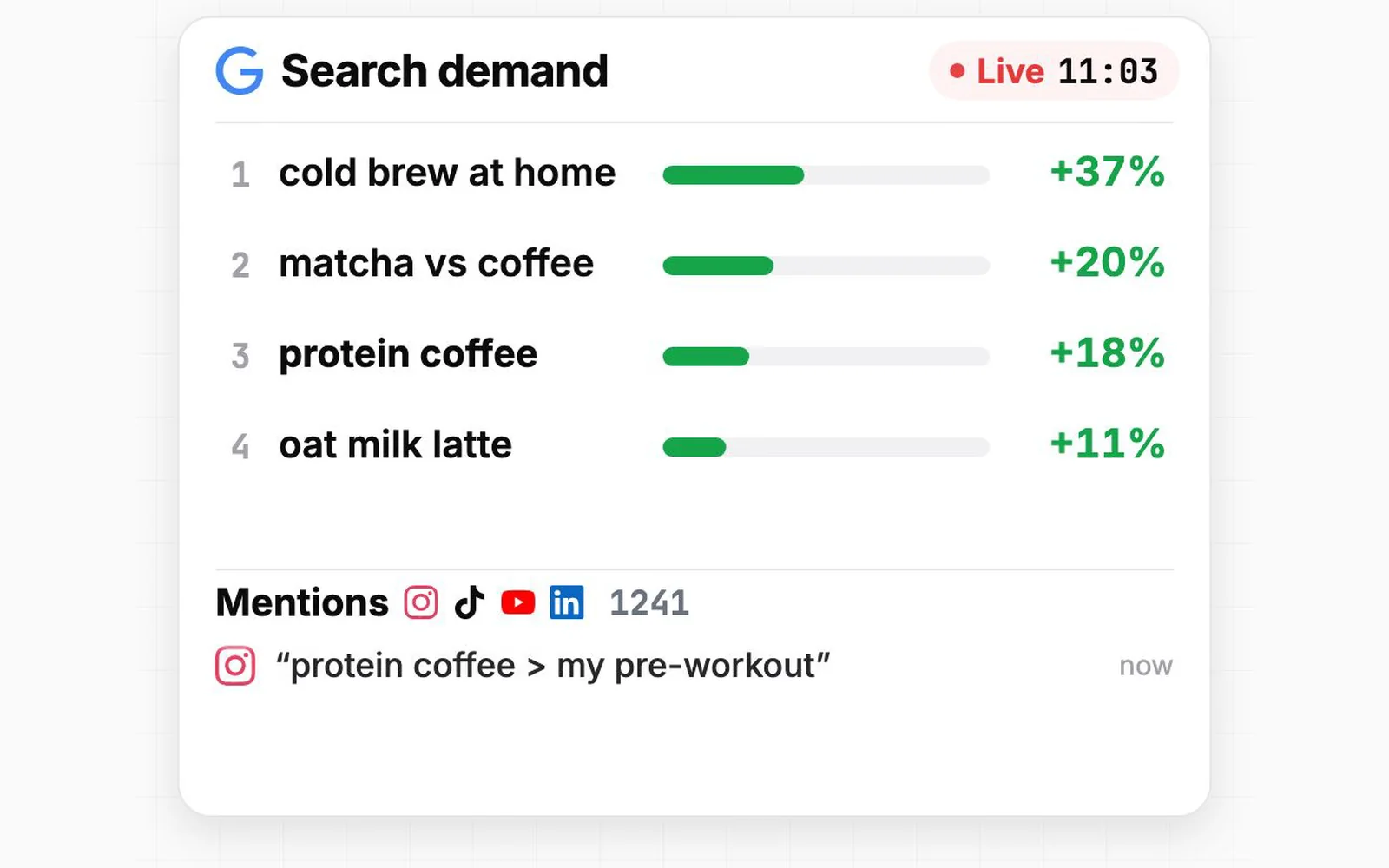
Search demand and social mentions, watched all day. Example data.
The system watches search demand and social mentions all day. The second a topic starts spiking, it flags it, drafts a post in your voice, builds the visual and puts it in the schedule for every channel. You didn’t spot the trend. It did, and it already moved.
Content engine: nothing goes out in the wrong voice
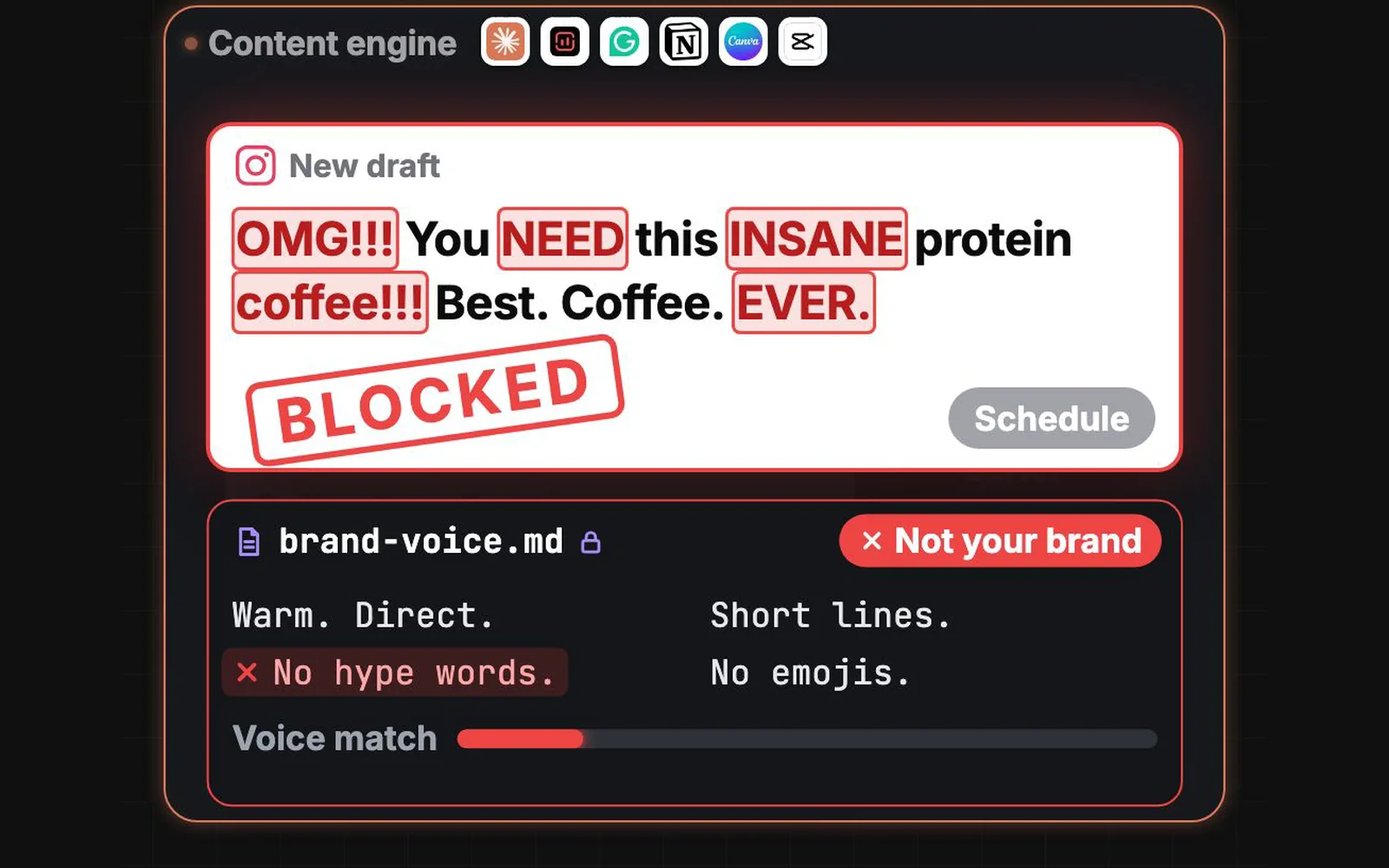
A draft that breaks brand-voice.md never reaches the schedule.
The content engine reads what people are searching for and the voice you set once. Then it builds the piece in three steps: a brief, an SEO pass and a hook. Claude writes, Surfer makes it rank and Grammarly cleans it.
How it’s built: the last step is a voice check against brand-voice.md. If the draft doesn’t sound like the brand, it doesn’t go out. It goes back with a note saying which line broke which rule.
Publishing: nobody logs in
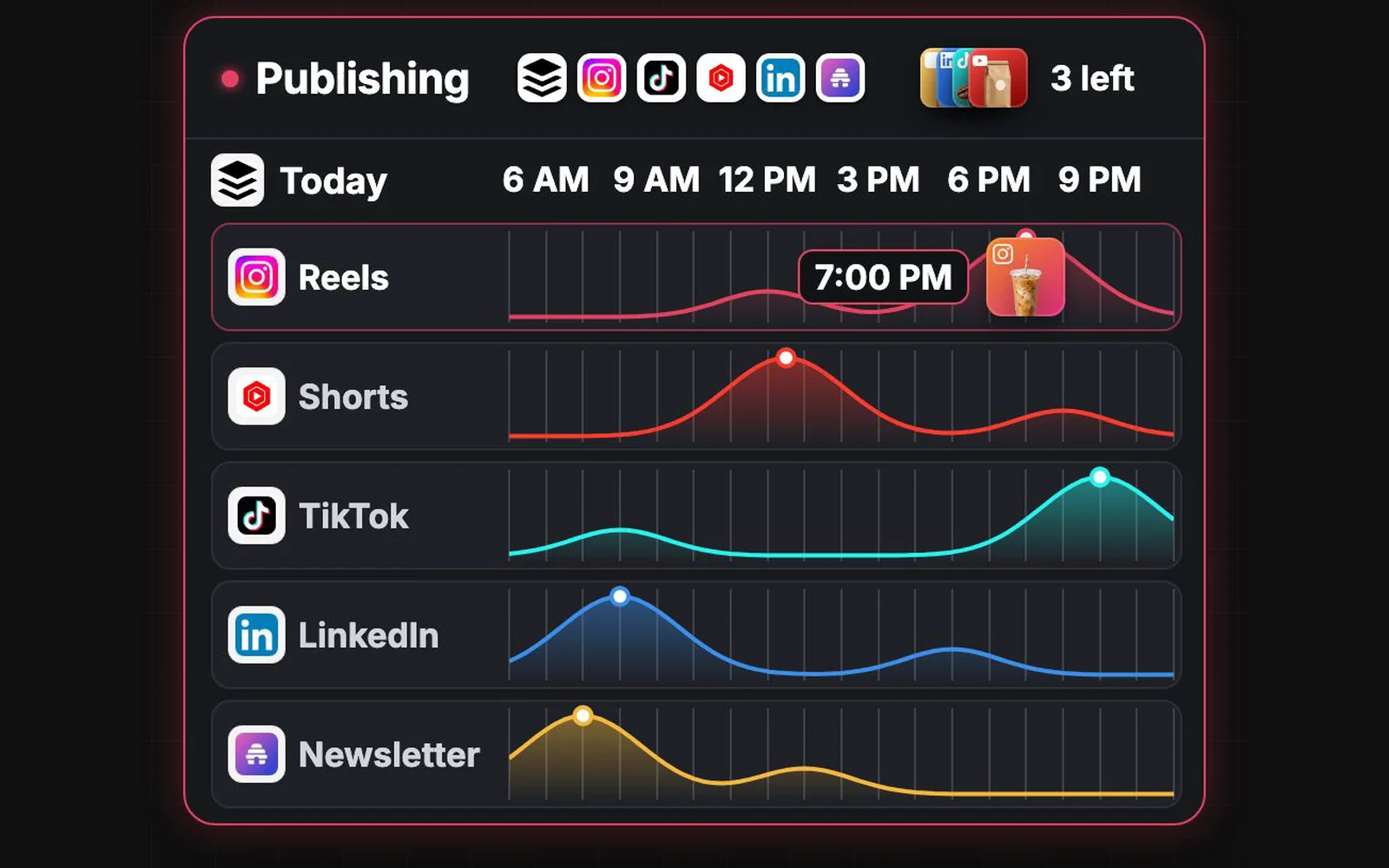
Each channel posts at the hour it actually lands.
Buffer schedules every post at the hour each channel actually performs: Reels, Shorts, TikTok, LinkedIn and the newsletter. Nobody logs in to five apps to post the same thing five times.
Market radar: a strategist that never blinks
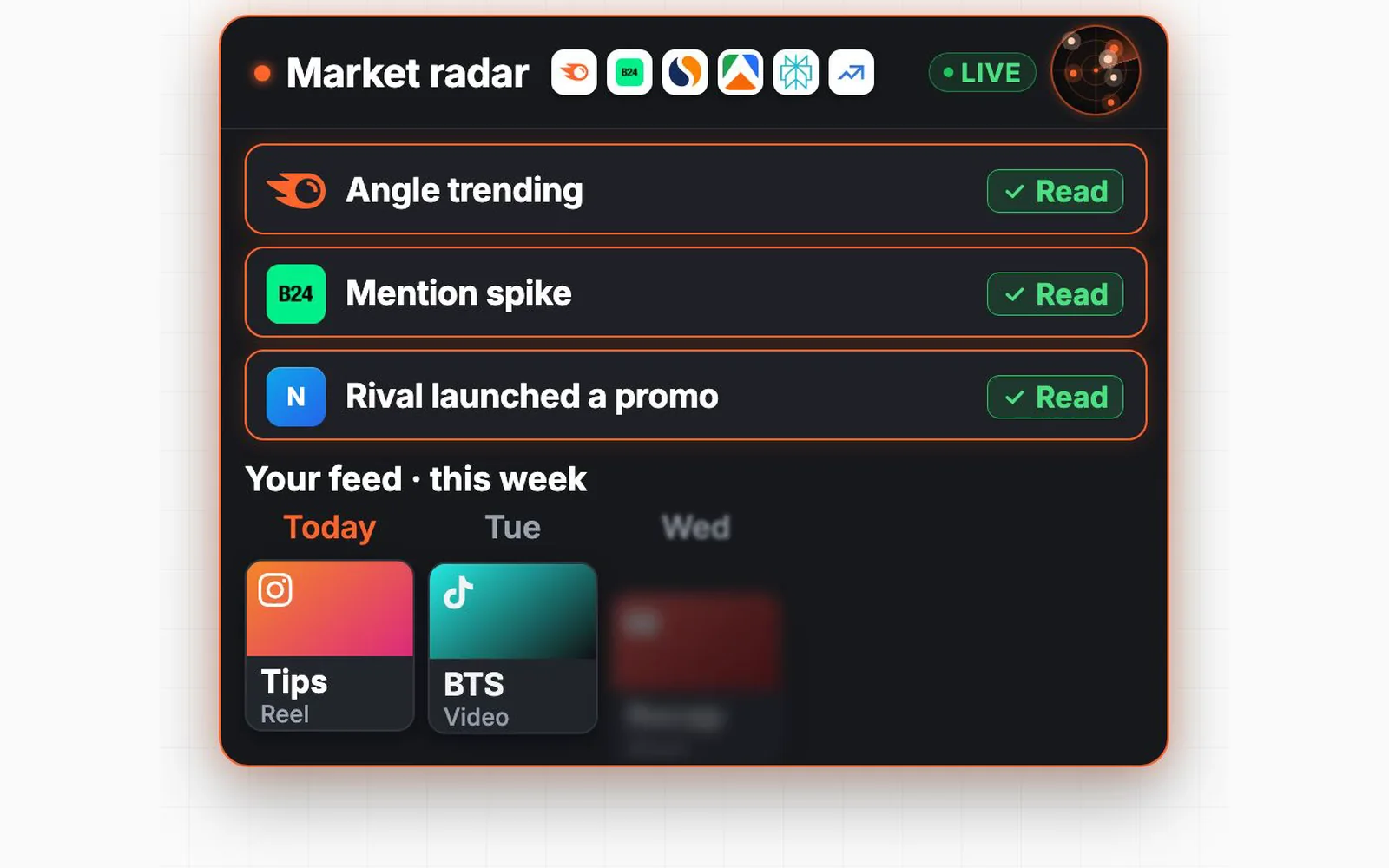
Competitor moves arrive as a feed, and your plan reorders around them.
It watches the competition so you don’t have to. A rival launches a promo, a mention spikes on Brand24, an angle starts trending. It catches it, reads it and reshapes your feed to answer before lunch, not next quarter.
Paid ads: the budget follows the winners
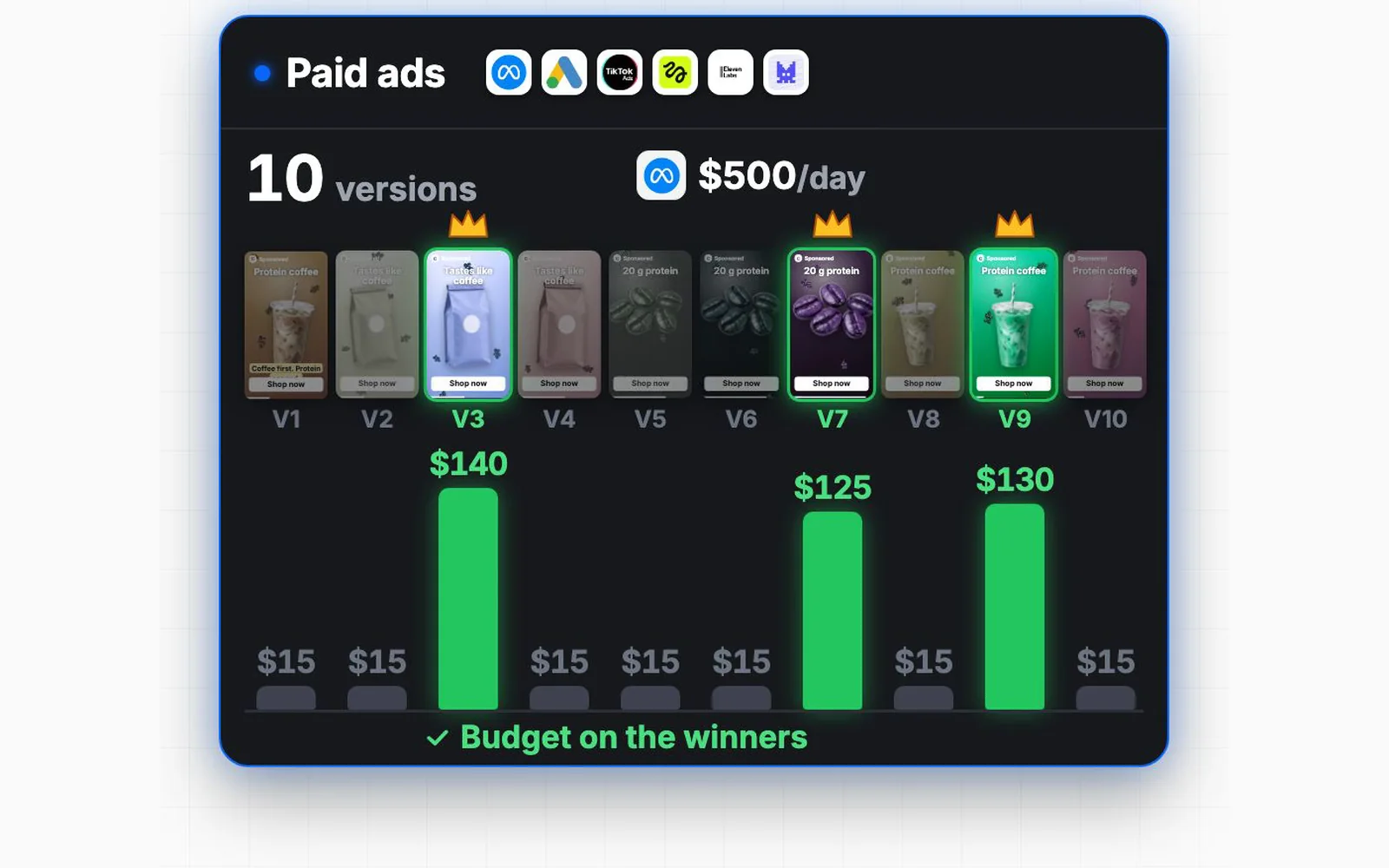
Ten versions from one product photo. Spend moves to the three that work.
Higgsfield turns one product photo into a video ad, ElevenLabs voices it, and the system ships ten versions. The budget then moves to the winners on its own, inside a daily cap you set. It can shift money between ads. It can’t raise the cap.
Leads: their phone rings in under a minute
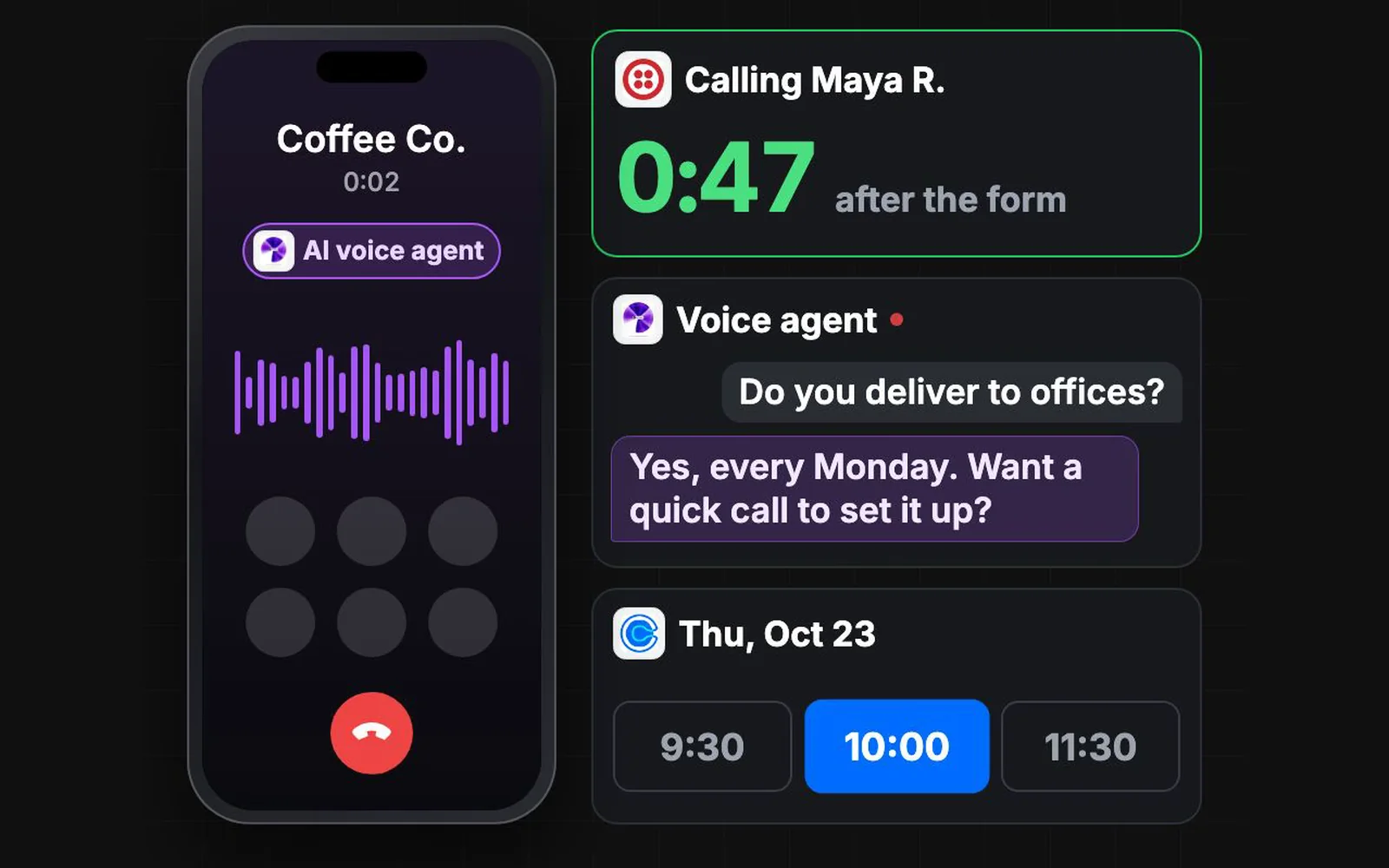
The callback starts less than a minute after the form.
Someone fills in your form at eleven at night. It’s saved in HubSpot, and their phone rings in under a minute. The voice agent answers their questions from the knowledge layer and books the call on your calendar.
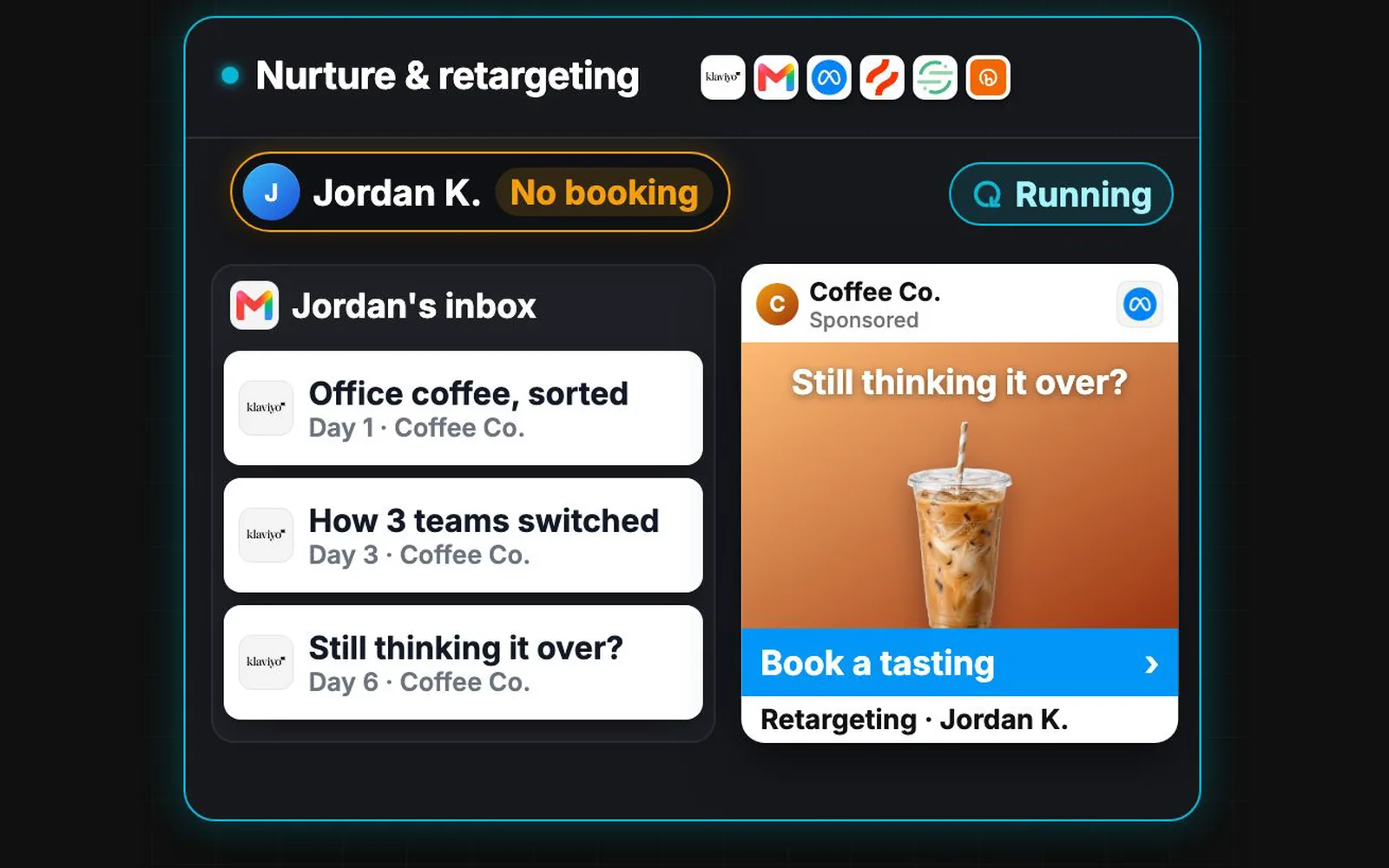
No booking? Nurture keeps going until they come back.
If they don’t book, nurture keeps going: a few useful emails and retargeting ads, until they come back. The speed matters more than the script. A lead who hears from you in a minute is still thinking about you.
Reviews and reputation: a reply ready before morning
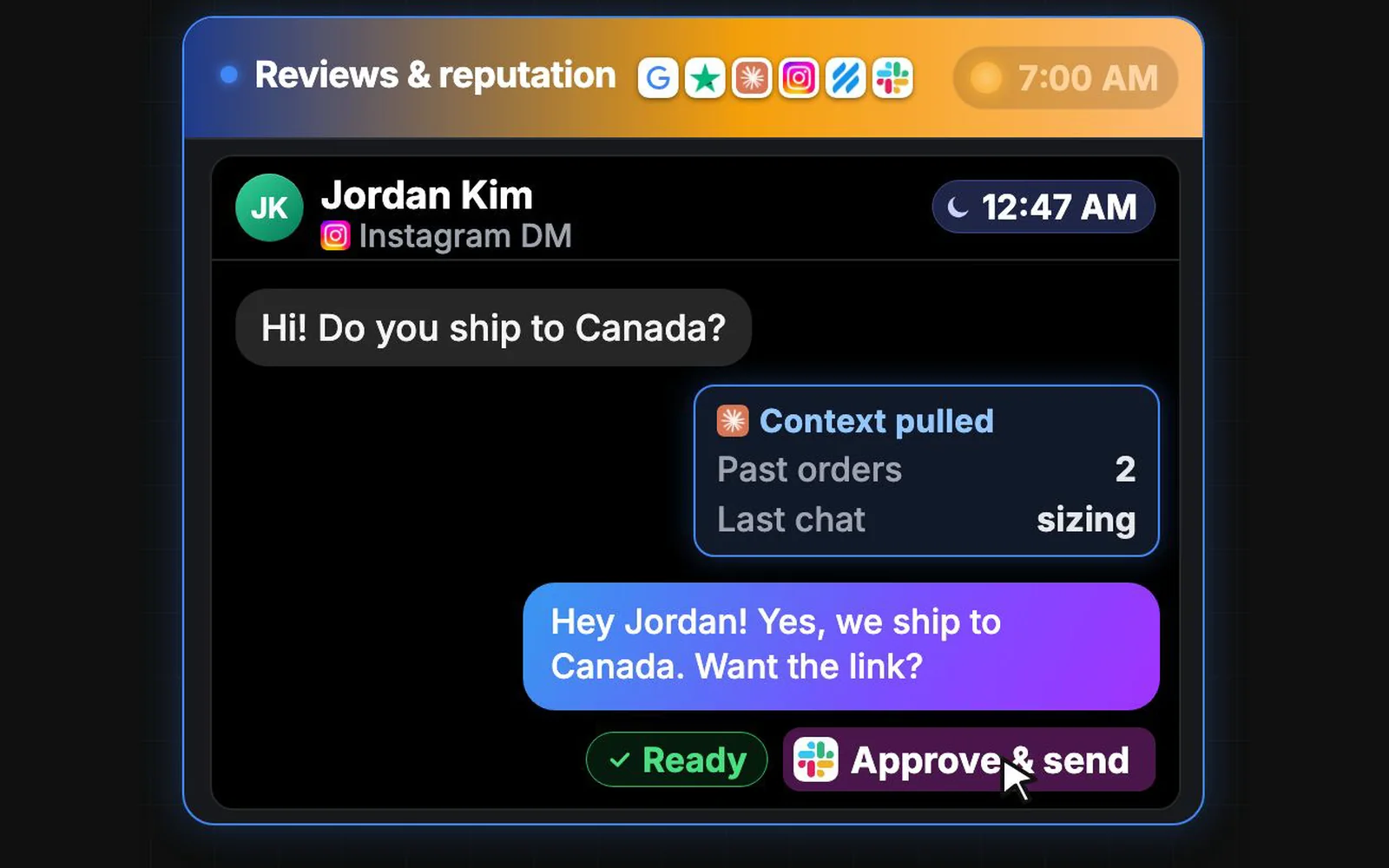
The reply is drafted overnight. You approve it with one tap.
A review lands, a DM comes in at midnight, someone tags you. It pulls the context (past orders, the last conversation), drafts the reply in your voice and has it ready before morning. Not a queue, a response.
The orchestrator: it decides who does the work
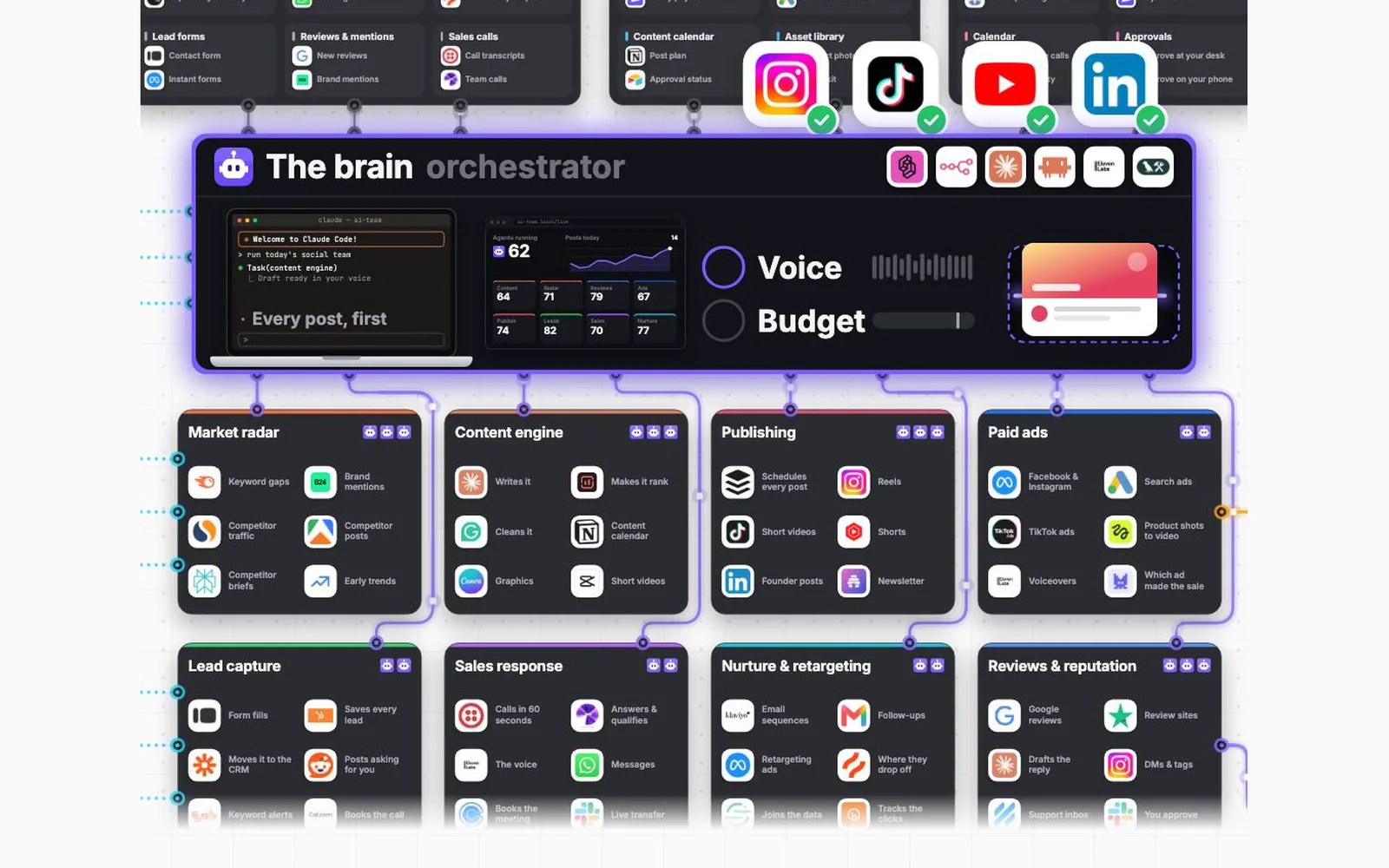
Every post goes through one gate: voice, then budget, then out.
Every post goes through the orchestrator first. It checks the voice, checks the budget and sends it out. If something’s off, it stops and calls the owner. It doesn’t do the work itself. It just decides who does.
How it’s built: Claude Code runs the orchestrator. Each department is a small set of agents with one tool each, and the orchestrator is the only part allowed to send anything outside the business.
Every morning, the numbers come back
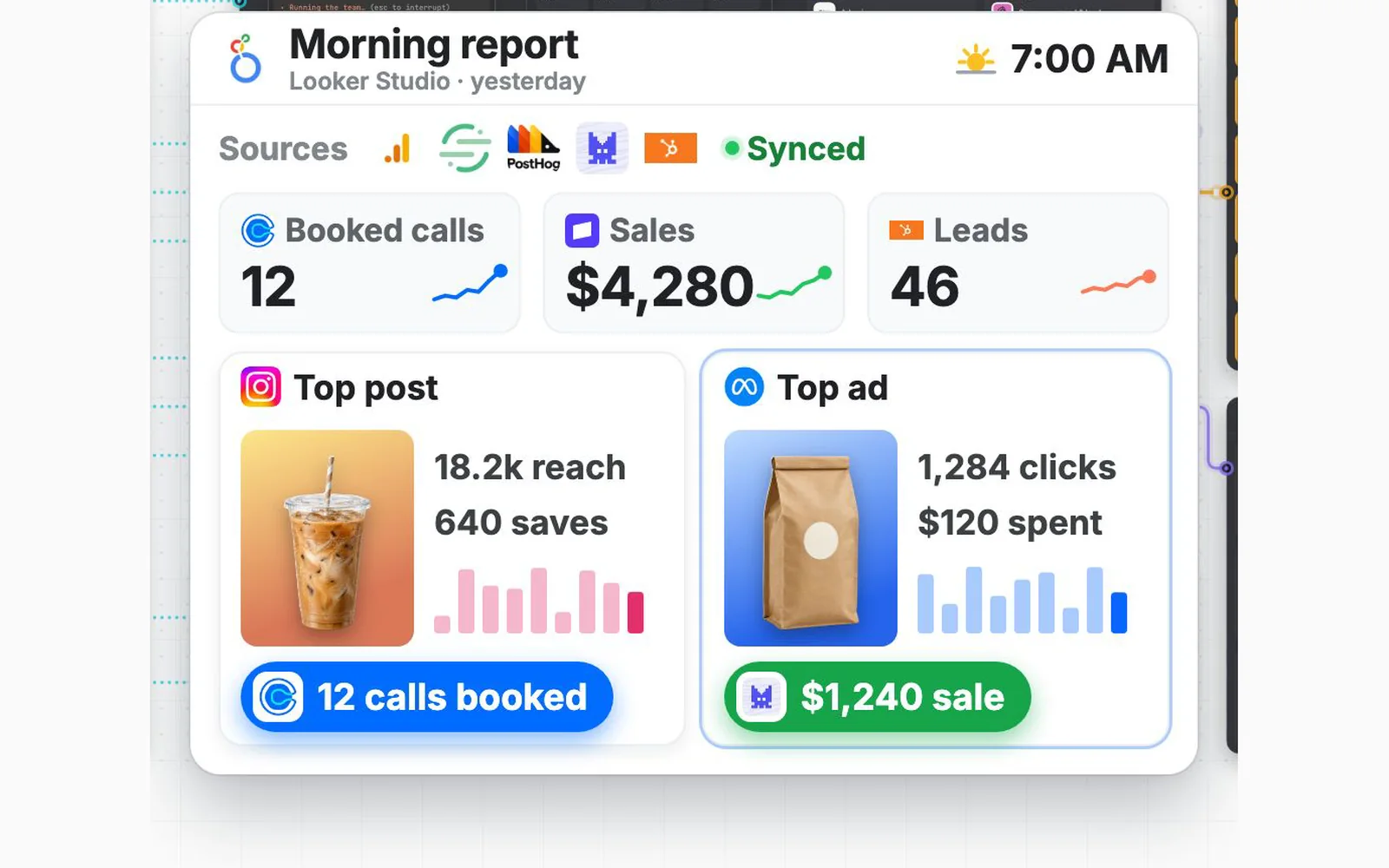
One page at 7:00 AM. Example numbers.
Every morning, one page: the post that booked calls, the ad that made the sale. What worked feeds straight back into the knowledge layer, and the system makes more of that.
What stays yours
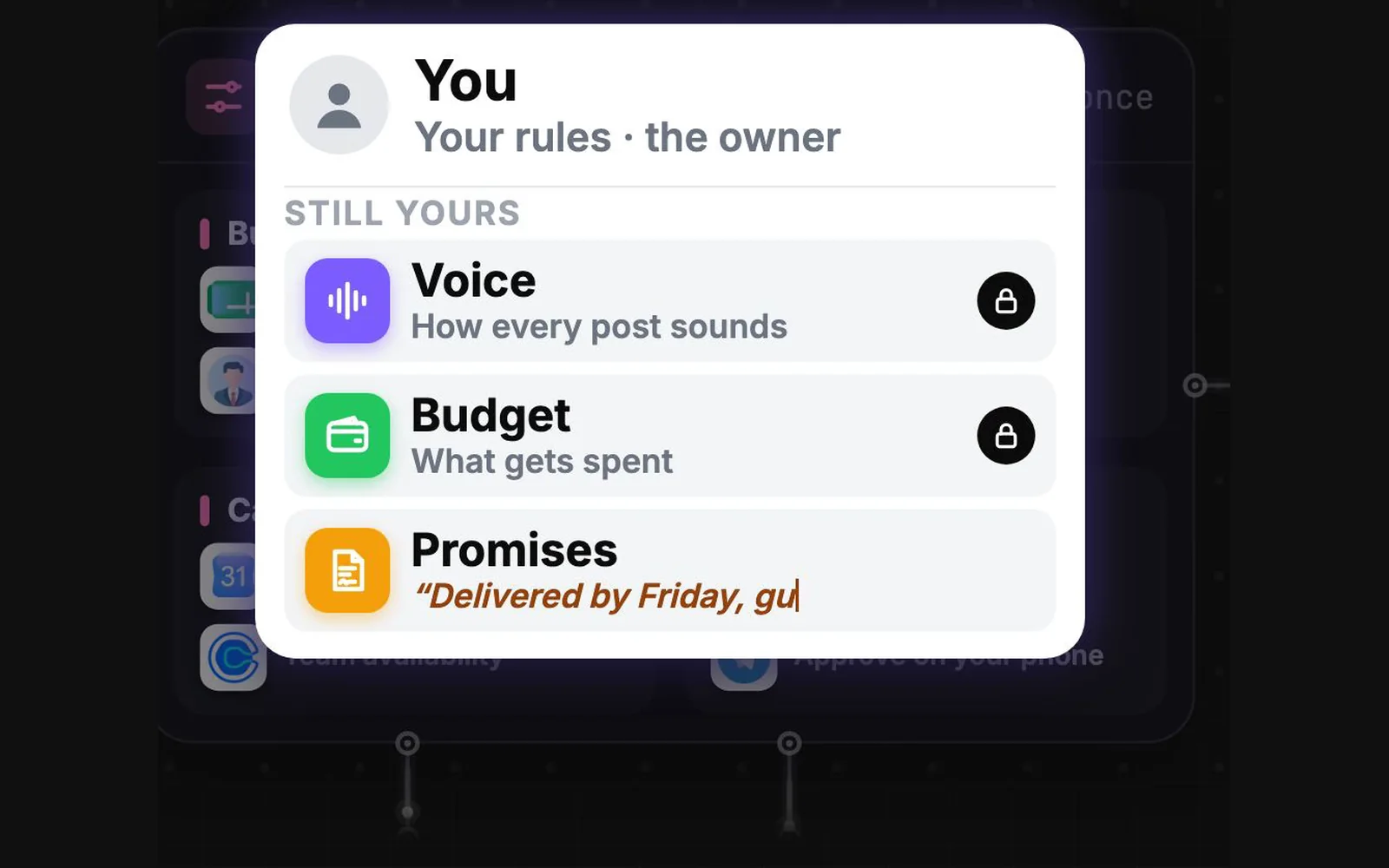
Three things no agent can change.
The owner still owns the voice, the budget and anything that reads like a promise. Those three are locked to you. Everything else runs.
Beyond social media, on one box on your desk
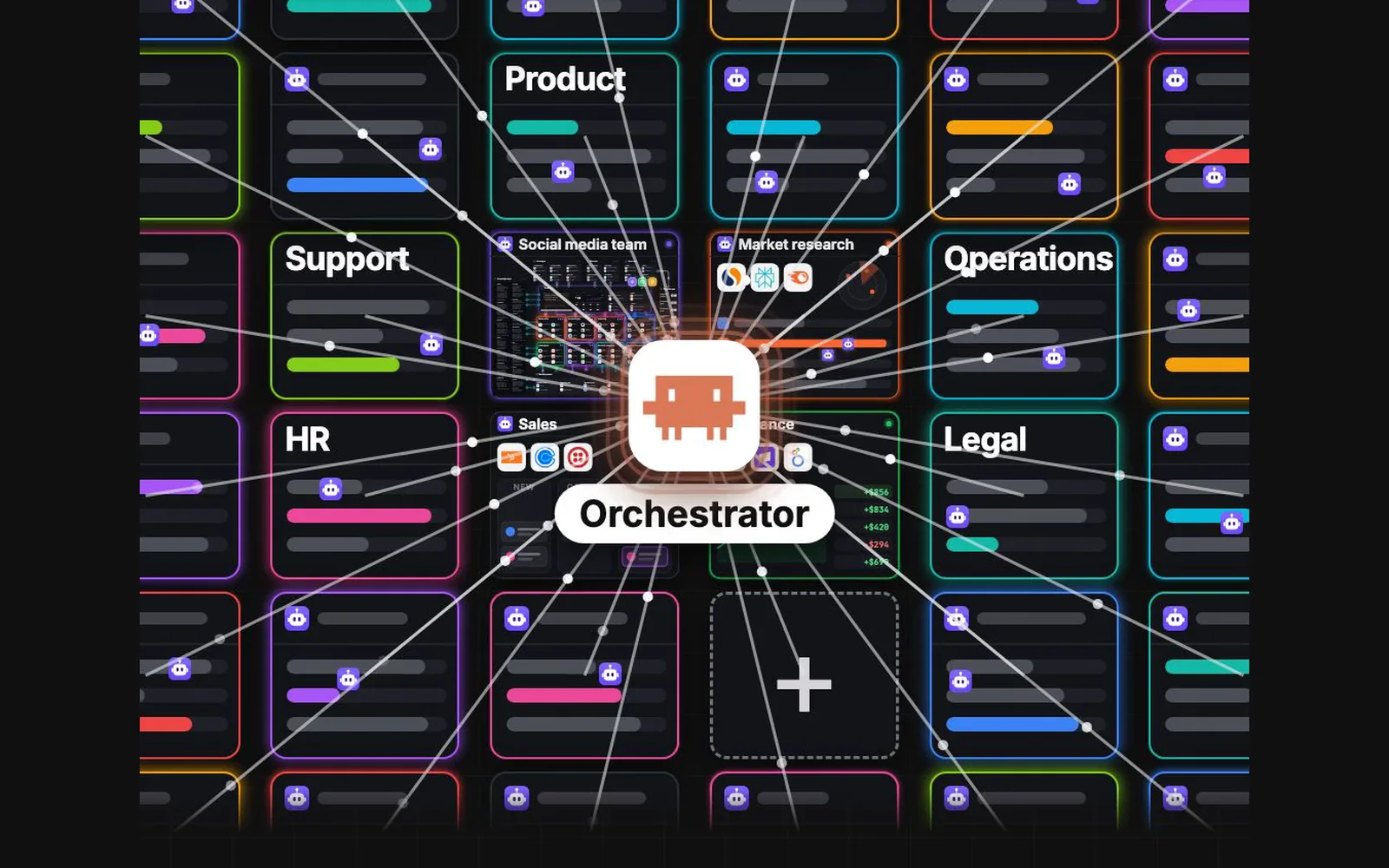
The same pattern works for any department.
This is just the social media team. The same pattern can run research, sales, finance and any other department you have, all through one orchestrator.
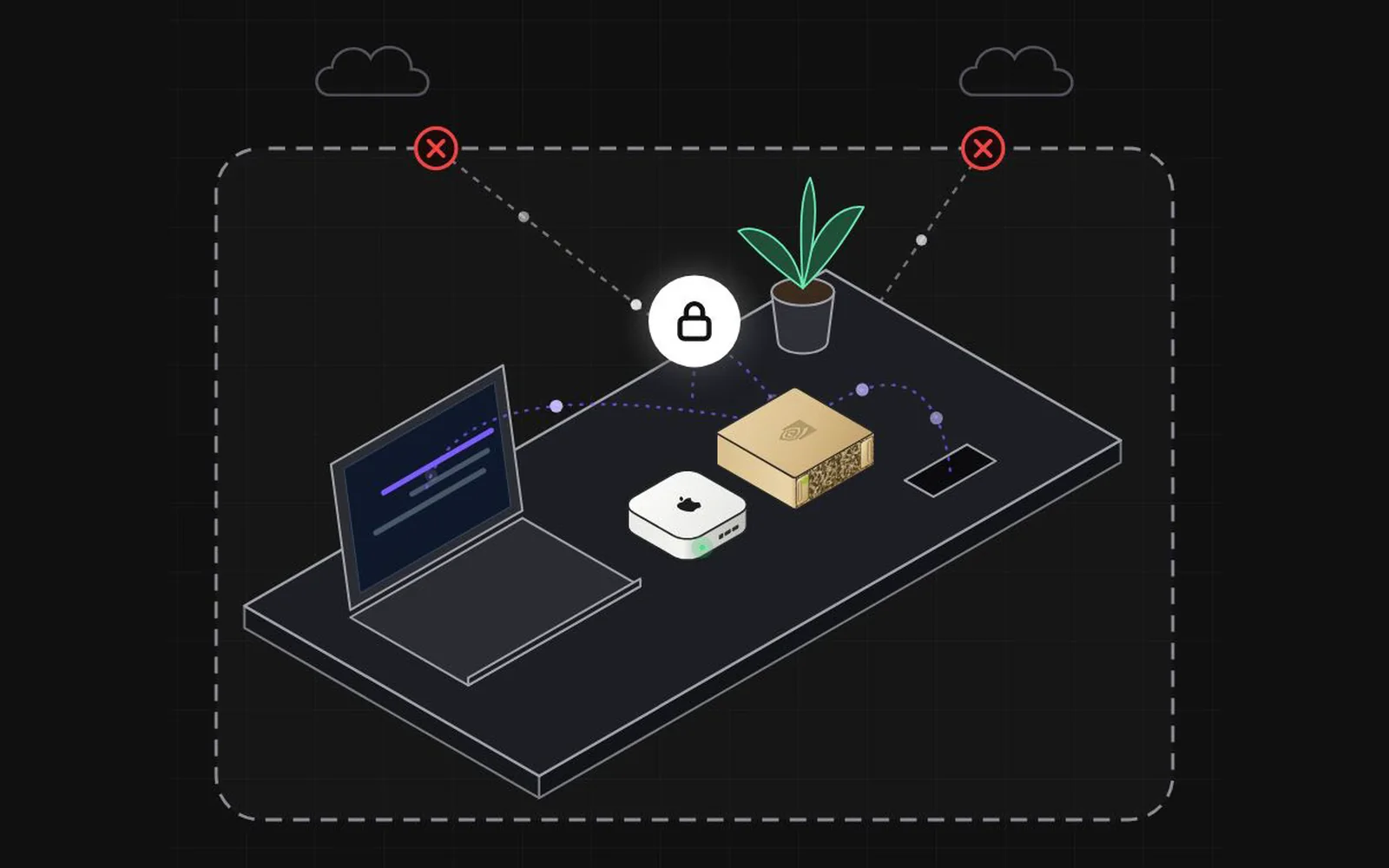
The files, the agents and the records live on one small computer you own.
It can all run on one small computer on your desk. Your knowledge layer, your customer records and the agents’ notes stay on hardware you own. The AI models themselves still run in the cloud, so the files only send what each task needs.
Where to start if you’re building your own
Don’t start with 62 agents. Start in this order:
- Write the knowledge layer first. Three files are enough to begin: brand-voice.md, value-messaging.md and a rules file listing what an agent may never do.
- Pick the department closest to money. For most small businesses that’s leads: a fast reply to every form and DM.
- Put a gate in front of anything public. Nothing posts, spends or promises without passing a voice check and a budget check.
- Add one department at a time, and only once the last one runs without you watching it.
brand-voice.md (a starting point)
# Brand voice

Warm. Direct. Short lines.
No hype words. No emojis.

We sound like: a friend who knows the product well.
We never: promise dates, prices or results that aren't in value-messaging.md.

If a draft breaks a rule above, send it back with the line that broke it.
Questions people ask
Does an AI social media team post without asking me?
Only what you allow. Every post passes a voice check and a budget check first, and anything that reads like a promise, or spends past your cap, stops and comes to you.
Will it still sound like me?
Yes, because every agent reads the same brand-voice.md before it writes. If a draft doesn’t match it, the content engine blocks it and sends it back.
Do I need to know how to code?
Not to use it. The knowledge layer is plain text files you can edit like a document. Building the system from scratch takes more, which is why I set it up for people.
Is this the same as hiring an agency?
No. An agency works in its own tools and its own voice. This runs on your files, your accounts and your rules, and you can read every decision it makes.
Want this built for your business?
I set these systems up for a small number of businesses at a time. Join the waitlist and tell me how you work today.